

- March 21, 2018
- Appetizers
Homemade Basil Aioli

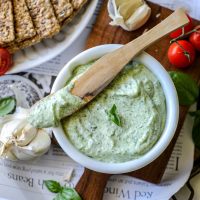
This homemade basil aioli is a creamy, flavorful sauce made with fresh basil, garlic, lemon juice, and a rich mayonnaise base. It’s the perfect spread or dipping sauce for sandwiches, grilled meats, roasted vegetables, and fries.
If you have ever made homemade mayonnaise, you already understand the magic of an emulsion. Basil aioli takes that same satisfying technique and turns it into something even more exciting by adding fresh basil, plenty of garlic, and a squeeze of lemon that makes the whole sauce taste alive and vibrant.
It is one of those recipes that sounds impressive but is genuinely simple once you understand the process, and it opens the door to elevating everyday meals in a way that store bought condiments cannot match. Once you make it from scratch, it is very hard to go back.
Why This Recipe Works
- Slowly drizzling the oil is the key to a perfect emulsion. Aioli is all about getting fat and liquid to combine into a stable, creamy sauce. Adding the avocado oil in a slow, steady stream while the food processor or immersion blender runs gives the egg yolks time to bind everything together gradually. Rush this step and the emulsion breaks, leaving you with a separated, oily mess instead of a thick, creamy sauce.
- Room temperature egg yolks emulsify more reliably than cold ones. Cold egg yolks straight from the refrigerator are stiffer and less willing to bind with the oil. Letting your egg yolks come to room temperature before you start gives you a smoother, more stable emulsion from the very first drop of oil.
- Layering the ingredients in the right order builds flavor and structure. Starting with the egg yolks and mustard, then adding the lemon juice, then the oil, then the seasonings and garlic, and finishing with the fresh basil is not arbitrary. Each step builds on the last. The mustard helps stabilize the emulsion early on, the garlic and salt season the base before the basil goes in, and adding the basil last keeps its color and fresh flavor bright rather than muted from over processing.

What Is Aioli?
Aioli is a fancy way of making flavored mayo, more specifically, garlic mayonnaise. The base is made up of lemon juice, mustard powder, egg yolks (raw), and oil. Then this mixture is combined with fresh garlic cloves and becomes a delicious spread that can be used in many recipes.
Do You Need Raw Eggs to Make Aioli?
Traditional aioli and mayonnaise are made with raw egg yolks, and yes, this recipe uses them too. The egg yolks are what make the emulsification possible and give the aioli its rich, creamy texture. Most healthy adults can enjoy raw egg yolks without any issue, especially when using fresh, high quality eggs from a trusted source.
That said, there are situations where raw eggs are a concern, including for pregnant women, young children, elderly individuals, or anyone with a compromised immune system. If raw egg yolks are a concern for you, here are a few options:
Pasteurized eggs: Pasteurized eggs in the shell are widely available at most major grocery stores and have been heat-treated to eliminate harmful bacteria while still working exactly like regular raw eggs in recipes. This is the easiest swap with zero change to the method or result.
Store bought mayonnaise as a base: If you want to skip the emulsification process entirely, you can blend about two thirds of a cup of your favorite store bought mayo with the fresh basil, garlic, lemon juice, and seasonings for a quick shortcut version. The texture and flavor will be slightly different, but it is a completely valid option for a fast weeknight condiment.
Egg free aioli: Aquafaba, which is the liquid from a can of chickpeas, can replace egg yolks in aioli for a vegan friendly version. Use about two tablespoons in place of the two yolks and follow the same slow drizzle method. The result is surprisingly creamy and works really well with the basil and garlic in this recipe.
What Is the Best Oil to Use for Aioli?
The oil you choose for aioli matters more than you might think, and it is one of the most common places people go wrong with homemade versions. The goal is a neutral or mildly flavored oil that lets the other ingredients shine without adding any bitterness or competing flavors.
Avocado oil is the top choice for this recipe for a few reasons. It has a very mild, clean flavor that does not overpower the basil and garlic. It is also high in healthy monounsaturated fats, has a naturally creamy texture when emulsified, and is widely available in most grocery stores.
Light olive oil is a solid second option. The keyword there is light, referring to flavor rather than calories. Light olive oil has been more heavily filtered and has a much milder taste than extra virgin olive oil, which can be too bold and peppery for aioli. Extra virgin olive oil in particular tends to turn bitter when it gets processed at high speed in a blender or food processor, which is the opposite of what you want.

Ingredients :
- Avocado oil: My preference!
- Raw Egg Yolks: Sub with pasteurized eggs if preferred.
- Mustard Powder: You can also sub with Dijon if needed.
- Lemon Juice: Freshly squeezed is best
- Fresh Basil: Remove the stems and leave the leaves whole
- Garlic Cloves: Fresh works best for a more intense garlic flavor
- Salt and Pepper
How to Make Basil Aioli
Making basil aioli from scratch is a straightforward process once you understand the emulsification technique. Here is how to do it step by step.
Step 1: Start with the egg yolks and mustard Add the two room temperature egg yolks and the dijon mustard or mustard powder to your food processor or to a tall jar if using an immersion blender. Pulse a few times until combined. The mustard acts as an emulsifier from the very start, helping the egg yolks bind with the oil more reliably.
Step 2: Add the lemon juice Add the lemon juice to the egg yolk mixture and pulse again until everything is well combined. This acidic element adds flavor and also helps with the stability of the emulsion.
Step 3: Slowly drizzle in the oil This is the most important step. Turn the food processor or immersion blender on high and begin adding the avocado oil in a very slow, steady, thin stream. This should take several minutes from start to finish. Going too fast is the number one reason homemade aioli breaks. If the oil and egg yolk separate and the mixture looks greasy and curdled, the emulsion has broken. Be patient and keep the speed slow and consistent.
Step 4: Add the garlic and seasonings Once all the oil is incorporated and you have a thick, creamy base, add the minced garlic, salt, and pepper. Pulse 5 to 10 times until fully combined. Taste at this point and adjust the salt as needed before moving on.
Step 5: Add the fresh basil Add the fresh basil leaves with the stems removed and process until the aioli looks similar to a pesto in color and texture. You may need to scrape down the sides of the bowl a few times to make sure everything is evenly mixed. The aioli should be bright green, thick, and creamy when it is done.

Expert Tips
Do not rush the oil. It truly cannot be said enough. A slow, steady drizzle is the difference between a beautifully creamy aioli and a broken, separated one. If your food processor has a small hole in the feed tube lid, use it. It is designed exactly for this kind of slow addition.
Taste as you go. Once the oil is in and the garlic and salt are added, taste before you add the basil. It is much easier to adjust seasoning at this point than after the herb is blended in.
Scrape the sides thoroughly when adding the basil. Fresh basil tends to collect on the sides of the food processor bowl rather than blending evenly on its own. Stop and scrape down a few times to make sure you get a uniform, vibrantly green finished aioli.
Use a tall narrow jar with an immersion blender for the easiest method. Add all the ingredients to a tall jar in the right order and use an immersion blender with a slow, steady upward motion as you drizzle in the oil. This method gives you excellent control over the process and leaves very little cleanup.
If the aioli breaks, you can sometimes save it. Start fresh with one new egg yolk in a clean bowl and very slowly whisk or blend the broken aioli into the new yolk a little at a time. The new yolk can re-emulsify the broken sauce if you go slowly enough.

Serving Suggestions
Basil aioli is one of the most versatile condiments you can keep in your refrigerator. Here are some of the best ways to use it:
- Serve up with crispy grilled chicken quarters or over a reverse seared steak
- Dip into these polenta French fries or try with these smoky roasted sweet potatoes
- Spread onto a cracker or onto a bun of your favorite burger or sandwich (it’s delicious on smoked burgers)
- Use as a dressing over this Italian Sub Salad recipe
- Serve up with a roasted crudite platter or your favorite cooked veggies
How to Store Basil Aioli
Store homemade basil aioli in a sealed glass jar or airtight container in the refrigerator for up to 1 week. Because this recipe uses raw egg yolks, it should always be kept cold and never left out at room temperature for extended periods.
Give it a quick stir before serving if it has been sitting in the fridge for a day or two, as some very slight separation can occur naturally and a quick stir brings it right back together.
Basil aioli does not freeze well. The emulsion breaks when frozen and thawed and the texture becomes grainy and unpleasant. Make it fresh and enjoy it within the week for the best flavor and quality.
More Recipes To Try
Homemade Garlic Basil Aioli
Ingredients
Base
- 2 Egg Yolks Room Temperature (*See notes above regarding raw egg yolks*)
- 1 tsp. Dijon Mustard or Mustard Powder
- 1/2 lemon juiced
- 2/3 cups Avocado Oil
Seasonings and Aromatics
- 6 Garlic Cloves minced
- 1 tsp. Salt
- 1 tsp Black Pepper
- 1/2 cup Fresh Basil stems removed
Instructions
- Add the room temperature egg yolks and dijon mustard or mustard powder to a food processor or tall jar. Pulse until combined.
- Add the lemon juice and pulse again until incorporated.
- With the food processor or immersion blender running on high, slowly drizzle in the avocado oil in a thin, steady stream. Take several minutes to add all the oil. Going too fast will break the emulsion.
- Once all the oil is incorporated and the base is thick and creamy, add the minced garlic, salt, and pepper. Pulse 5 to 10 times until fully combined. Taste and adjust salt as needed.
- Add the fresh basil leaves with stems removed. Process until the aioli is bright green and creamy, scraping down the sides as needed.
- Serve immediately or store in a sealed jar in the refrigerator for up to 1 week.
Video
Notes
- Room temperature egg yolks emulsify more reliably than cold ones. Remove eggs from the fridge 20 to 30 minutes before starting.
- Adding the oil too quickly is the most common reason aioli breaks. Be patient and keep the stream slow and steady.
- If the aioli breaks, start with a fresh egg yolk and slowly blend the broken mixture back into it.
Nutrition
