

- September 14, 2026
- Appetizers
Smoked Beef Jerky Recipe

Make homemade smoked beef jerky with eye of round, a savory marinade, and real smoke flavor. Learn the best temperature, timing, and slicing tips.
Making smoked beef jerky at home is easier than you might think, and using a smoker gives you something a dehydrator simply can’t replicate: real, natural smoke flavor.
This homemade beef jerky recipe starts with lean eye of round sliced into thin strips and soaked overnight in a savory marinade made with soy sauce, Worcestershire sauce, brown sugar, garlic, onion, and plenty of black pepper. The marinated beef is then smoked low and slow at 175-180°F until it’s dried, chewy, and packed with great flavor.
My jerky took about 3 to 3 1/2 hours on the smoker, but drying time can vary considerably depending on the thickness of your beef slices, your smoker, airflow, and even the weather. Instead of relying strictly on time, I’ll show you exactly what to look for so you know when your jerky is done.
Whether this is your first time making your own jerky or you’re looking for a reliable smoked beef jerky recipe to add to your favorite smoker recipes, this guide covers everything you need to know.
Why This Smoked Beef Jerky Recipe Works
- Eye of round is an ideal cut for jerky. It’s affordable, readily available at most grocery stores, and naturally lean. Less fat means better drying and a longer shelf life.
- The marinade balances salty, savory, sweet, and smoky flavors. Soy sauce and Worcestershire sauce create a deeply savory base, while brown sugar adds just enough sweetness without making this taste like candied beef.
- Low temperatures dry the beef without cooking it too quickly. Holding the smoker around 175-180°F allows the jerky strips to slowly lose moisture while developing real smoke flavor.
- It’s approachable for beginners. You don’t need much special equipment. A smoker, a very sharp knife, wire racks or grill grates, and a little patience are all you need to make delicious beef jerky at home.

What Is the Best Beef for Jerky?
The best beef for homemade jerky is a lean cut of meat with minimal intramuscular fat. Unlike a steak, where marbling is usually desirable, excess fat isn’t your friend when making jerky. Fat doesn’t dehydrate the same way lean muscle does and can become rancid during storage. For best results, choose a lean roast and trim away as much visible fat as possible before slicing.
Eye of round is my first choice for this recipe. It’s extremely lean, has a consistent shape, and is easy to cut into evenly sized strips of meat. It’s also generally inexpensive, making it a great choice when you’re working with several lbs of meat.
If you can’t find eye of round, there are several other good options for making your own smoked beef jerky. Top round roast is another excellent choice and is similarly lean. London broil can also work well, although it’s technically a preparation rather than a specific cut of beef. Flank steak makes flavorful, tender jerky but tends to be more expensive and requires a little more careful trimming.

Tips for Slicing Beef for Jerky
How you slice your beef affects both the texture of the finished jerky and how evenly it dries. Here are a few tips for getting the best results:
- Partially freeze the beef first: Place the eye of round in the freezer for about 60-90 minutes, or until very firm but not frozen solid. This makes it much easier to cut clean, thin strips with a very sharp knife.
- Slice against the grain for tender jerky: Cutting across the muscle fibers creates jerky that’s easier to bite and chew. This is my preferred method for this recipe.
- Slice with the grain for chewier jerky: Keeping the longer muscle fibers intact creates a more traditional, substantial chew.
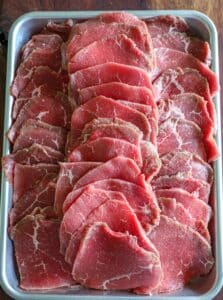
- Aim for 1/8-1/4-inch slices: I like to stay around these two measurements for a good balance between tenderness and chewiness.
- Keep the thickness consistent: Thin pieces will dry much faster than thicker ones. Uniform beef slices make it easier to get the entire batch finished around the same time.
- Use a meat slicer if you have one: It’s not necessary, but a meat slicer is a great option if you make your own jerky frequently and want extremely consistent thin slices of meat.
Ultimately, there’s no wrong choice between slicing with or against the grain, but it comes down to the texture you prefer. Regardless of direction, consistent thickness is the most important factor for even drying.
Smoked Beef Jerky Ingredients
- Eye of round
- Low-sodium soy sauce
- Worcestershire sauce
- Brown sugar
- Apple cider vinegar
- Coarse black pepper
- Garlic powder
- Onion powder
- Smoked paprika
- Red pepper flakes, optional

How to Make Smoked Beef Jerky
1. Prepare the Beef: Trim the eye of round thoroughly, removing any exterior silver skin and excess fat. Partially freeze the beef for 60-90 minutes. Using a very sharp knife, slice it against the grain into approximately 1/8-1/4-inch strips. The more consistent your sliced beef is, the more evenly it will dry during the smoking process.

2. Make the Beef Jerky Marinade: Combine the soy sauce, Worcestershire sauce, brown sugar, apple cider vinegar, black pepper, garlic powder, onion powder, smoked paprika, and red pepper flakes. Mix until the brown sugar has mostly dissolved. Add the beef slices and marinade to a large Ziploc bag or sealed container. Toss everything thoroughly so the marinade reaches every piece. Remove as much air as possible from the bag and refrigerate for 12-24 hours. I recommend letting it marinate overnight and smoking it the next day. You can place the bag in a shallow pan in case of leaks. If you’re using a bowl instead, cover it tightly with plastic wrap.

3. Preheat the Smoker: Preheat your smoker to 175-180°F. The goal is to maintain low temperatures throughout the cooking process so the meat gradually dries instead of roasting quickly. If your smoker cannot maintain 175°F, use the lowest temperature available and keep in mind that your cooking time may change.
4. Remove the Excess Marinade: Remove the jerky strips from the marinade and discard the excess marinade. Arrange the strips between paper towels and gently pat the surface dry. You don’t need to squeeze the meat or remove every little bit of marinade. You’re simply removing excess surface moisture. This helps the meat begin drying more efficiently and allows smoke to adhere nicely to the surface.

5. Arrange the Beef on the Smoker: Place the beef in a single layer directly across the grill grates or onto wire racks ( I prefer racks so I can easily move the jerky around on the smoker). Don’t overlap the jerky strips so they have enough airflow. Leaving a little bit of room between pieces promotes airflow, which is an important part of the drying process. If you’re concerned about drips, aluminum foil can be placed on a lower drip pan, but don’t place foil directly underneath the meat in a way that restricts airflow.

6. Smoke the Beef Jerky: Smoke the jerky at 175-180°F for approximately 3-4 hours, checking it periodically. My jerky was ready after about 3 to 3 1/2 hours. Thicker beef slices can take 4-5 hours or potentially longer. If you’re using an electric smoker. charcoal smoker, or pellet smoker, the basic process remains the same. Maintain low temps, allow plenty of airflow around the meat, and judge doneness by texture rather than time alone. If your smoker uses wood chips, add them according to your smoker manufacturer’s directions. Hickory, oak, pecan, cherry, and apple are all great choices.

How Long Does Beef Jerky Take on a Smoker?
At 175-180°F, plan on approximately 3-5 hours. Mine took about 3 1/2 hours, but don’t treat that as an exact deadline. Jerky can take a long time when it’s sliced thicker, while exceptionally thin strips can finish much sooner. Humidity, smoker airflow, the moisture content of the meat, and temperature fluctuations can also affect the smoking process.
Start checking around the 3-hour mark and remove individual pieces as they’re ready. There’s no rule saying the entire first batch has to come off the smoker simultaneously.
How Do You Know When Beef Jerky Is Done?
Don’t judge jerky solely by cooking time. The bend test is one of the easiest ways to determine whether your finished product has the right texture. Remove one piece of jerky and allow it to cool for several minutes. Bend it gently.
Properly dried jerky should:
- Feel dry and firm rather than wet or spongy.
- Bend without immediately snapping in half.
- Develop small cracks or visible fibers when bent.
- Not release visible moisture when squeezed.
If it bends very easily and still feels soft or damp inside, continue smoking. If it immediately snaps like a cracker, you’ve taken out too much moisture. It’s still edible (and probably delicious jerky), but it will be much more brittle. Remember that hot jerky is softer than cooled jerky. Always let your test piece cool before deciding whether the rest needs more time.

How to Store Homemade Beef Jerky
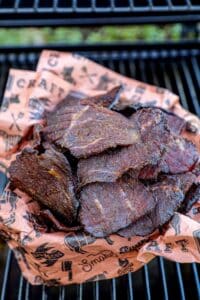
Let the jerky cool completely before transferring it to an airtight container. This is important because packaging warm jerky can create condensation. If you see moisture forming inside your sealed container, the jerky likely contains too much moisture or was packaged before it had completely cooled. Because this recipe doesn’t use curing salt or commercial preservatives, I recommend keeping the finished jerky refrigerated in an airtight container or Ziploc bag and enjoying it within about 1-2 weeks. For longer storage, freeze it in a well-sealed freezer bag or airtight container. Homemade jerky is a great snack for road trips, camping, tailgating, and meal prep, but keep refrigerated jerky properly chilled when traveling.

Food Safety When Making Homemade Beef Jerky
Because jerky is cooked at low temperatures for long periods of time, food safety deserves special attention. Use clean equipment, keep raw beef refrigerated while marinating, and never reuse excess marinade that has been in contact with raw beef unless it has been properly cooked.
Food-safety authorities recommend incorporating an adequate pathogen-kill step when making jerky rather than assuming that the drying process itself makes raw meat safe. Beef should reach a safe internal temperature during processing. If your smoker’s low-temperature drying process doesn’t reliably accomplish this, incorporate an appropriate heating step before or during dehydration.
Curing salts containing sodium nitrite are sometimes used in jerky recipes, particularly for products intended for longer storage. This recipe does not require curing salt, and I recommend refrigerated storage for the finished jerky. Curing salt should never be added casually or measured by guesswork. If you choose to use it in a different marinade or jerky recipe, follow a tested recipe and the manufacturer’s directions for the exact amount and kind of meat you’re curing.
Smoked Beef Jerky Flavor Variations
Once you’ve made classic beef jerky, this base recipe is a great place to experiment.
- Sweet and spicy jerky, add a little more brown sugar or maple syrup along with cayenne, chili flakes, or hot sauce.
- Pepper jerky, increase the coarse black pepper and press additional pepper onto the surface of the jerky strips before smoking.
- Asian-inspired jerky, add fresh ginger and sesame oil to the marinade and garnish the finished beef with toasted sesame seeds.
You can also create a completely different marinade using ingredients such as teriyaki sauce, gochujang, hot honey, bourbon, or additional spices. Once you understand the basic technique, making your own smoked beef jerky is a great way to experiment with different flavor combinations.
More Recipes

Smoked Beef Jerky Recipe
Equipment
- Wire Racks
Ingredients
- 5 lb Eye of Round Roast Mostly Frozen (this helps with slicing)
Marinade
- 2 cups Low Sodium Soy Sauce (do not substitute)
- 1 cup Worcestershire Sauce
- 1/3 cup Brown Sugar or honey
- 4 tbsp Apple Cider Vinegar
- 1 tbsp Black Pepper
- 1 tbsp Onion Powder
- 1 tbsp Garlic Powder
- 1 tbsp Paprika
Instructions
- Trim the beef. Trim the eye of round of any visible exterior fat and silver skin. Keep the beef mostly frozen for easier slicing (I let it defrost in my fridge just overnight only 8-12 hours so it's still mostly frozen through). It should be firm enough to hold its shape but still possible to cut safely with a very sharp knife.
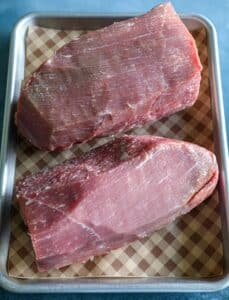
- Slice the beef. Using a very sharp knife or meat slicer, cut the eye of round into strips approximately 1/8-1/4 inch thick. Slice against the grain for more tender jerky or with the grain for a chewier texture. Try to keep the pieces as similar in thickness as possible for even cooking.
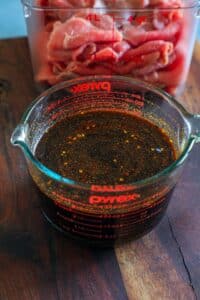
- Make the marinade. In a large bowl, whisk together the soy sauce, Worcestershire sauce, brown sugar, apple cider vinegar, black pepper, garlic powder, onion powder, and smoked paprika, well combined and the brown sugar has mostly dissolved.
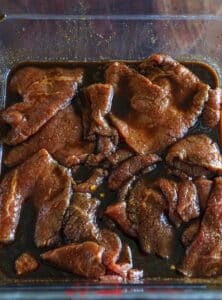
- Marinate the beef. Add the sliced beef and marinade to a large zip-top bag or sealed container. Toss and massage the beef so all of the slices are evenly coated. Refrigerate for 12-24 hours, turning the bag occasionally if possible.
- Preheat the smoker. Preheat your smoker to 175-180°F.
- Prepare the jerky. Remove the beef strips from the marinade and discard the remaining marinade. Arrange the beef between paper towels and firmly pat away excess surface moisture. It's best to dry them as much as possible so you're not steaming on the smoker.
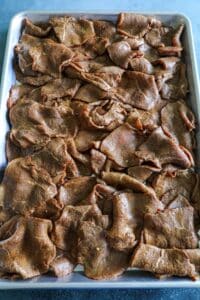
- Arrange on the smoker. Place the jerky strips in a single layer directly onto the grill grates or wire racks. Leave a little space between the pieces so air and smoke can circulate freely. Do not overlap the beef.
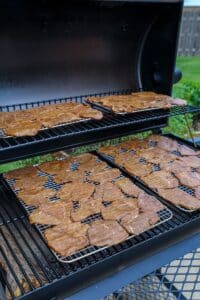
- Smoke the beef jerky. Smoke at 175-180°F for approximately 3-5 hours. Begin checking the jerky around the 3-hour mark. My 1/8-1/4-inch slices took approximately 3-3 1/2 hours, but thicker pieces may take longer.
- Check for doneness. Remove a piece and allow it to cool for several minutes before testing. Properly dried jerky should feel firm and dry but remain flexible. When bent, it should develop small cracks and visible fibers without immediately snapping in half. If the center still feels soft or moist, continue smoking and check again every 20-30 minutes.
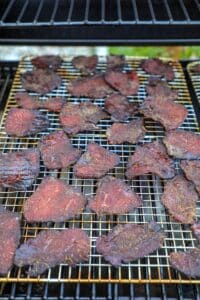
- Cool and store. Remove the finished jerky from the smoker and allow it to cool completely before storing. Because this recipe does not use curing salt or commercial preservatives, transfer the cooled jerky to an airtight container and store it in the refrigerator for up to 1-2 weeks. Freeze for longer storage.See notes below for additional storage and food safety information.

Notes
Nutrition
