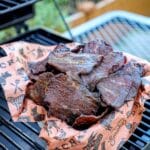
Smoked Beef Jerky Recipe
Make homemade smoked beef jerky with eye of round, a savory marinade, and real smoke flavor. Learn the best temperature, timing, and slicing tips.
Servings 2.5 lbs of Jerky
Calories 345kcal
Equipment
- Wire Racks
Ingredients
- 5 lb Eye of Round Roast Mostly Frozen (this helps with slicing)
Marinade
- 2 cups Low Sodium Soy Sauce (do not substitute)
- 1 cup Worcestershire Sauce
- 1/3 cup Brown Sugar or honey
- 4 tbsp Apple Cider Vinegar
- 1 tbsp Black Pepper
- 1 tbsp Onion Powder
- 1 tbsp Garlic Powder
- 1 tbsp Paprika
Instructions
- Trim the beef. Trim the eye of round of any visible exterior fat and silver skin. Keep the beef mostly frozen for easier slicing (I let it defrost in my fridge just overnight only 8-12 hours so it's still mostly frozen through). It should be firm enough to hold its shape but still possible to cut safely with a very sharp knife.
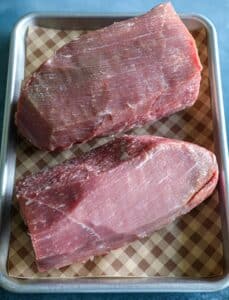
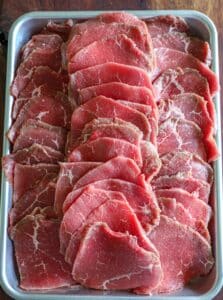
- Slice the beef. Using a very sharp knife or meat slicer, cut the eye of round into strips approximately 1/8-1/4 inch thick. Slice against the grain for more tender jerky or with the grain for a chewier texture. Try to keep the pieces as similar in thickness as possible for even cooking.
- Make the marinade. In a large bowl, whisk together the soy sauce, Worcestershire sauce, brown sugar, apple cider vinegar, black pepper, garlic powder, onion powder, and smoked paprika, well combined and the brown sugar has mostly dissolved.
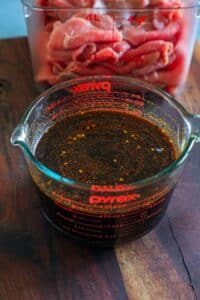
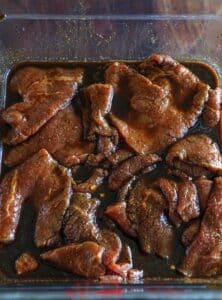
- Marinate the beef. Add the sliced beef and marinade to a large zip-top bag or sealed container. Toss and massage the beef so all of the slices are evenly coated. Refrigerate for 12-24 hours, turning the bag occasionally if possible.
- Preheat the smoker. Preheat your smoker to 175-180°F.
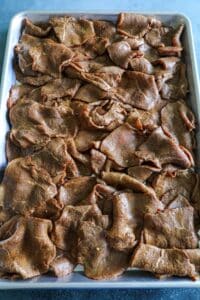
- Prepare the jerky. Remove the beef strips from the marinade and discard the remaining marinade. Arrange the beef between paper towels and firmly pat away excess surface moisture. It's best to dry them as much as possible so you're not steaming on the smoker.
- Arrange on the smoker. Place the jerky strips in a single layer directly onto the grill grates or wire racks. Leave a little space between the pieces so air and smoke can circulate freely. Do not overlap the beef.
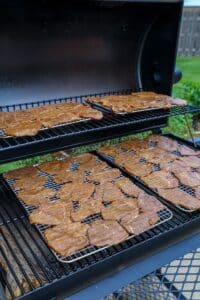
- Smoke the beef jerky. Smoke at 175-180°F for approximately 3-5 hours. Begin checking the jerky around the 3-hour mark. My 1/8-1/4-inch slices took approximately 3-3 1/2 hours, but thicker pieces may take longer.
- Check for doneness. Remove a piece and allow it to cool for several minutes before testing. Properly dried jerky should feel firm and dry but remain flexible. When bent, it should develop small cracks and visible fibers without immediately snapping in half. If the center still feels soft or moist, continue smoking and check again every 20-30 minutes.
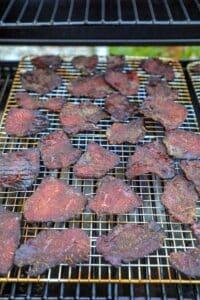
- Cool and store. Remove the finished jerky from the smoker and allow it to cool completely before storing. Because this recipe does not use curing salt or commercial preservatives, transfer the cooled jerky to an airtight container and store it in the refrigerator for up to 1-2 weeks. Freeze for longer storage.See notes below for additional storage and food safety information.
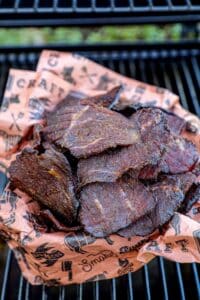
Slicing a mostly frozen roast by hand is the easiest method. Once cut, the pieces will defrost quicker and release more moisture into the marinade. This will also help dilute some of the saltiness and balance the flavor.
I prefer lightly greased wire racks. This allows you to easily move the jerky on and off the smoker, or move them around to account for hot spots, etc.
Notes
Wood: Oak, hickory, pecan, cherry, or apple all work well. Because the thin beef has a lot of exposed surface area, avoid excessively heavy smoke.
Food Safety: Low-temperature smoking alone should not be assumed to provide a pathogen-kill step. Follow current USDA guidance for safely heating meat when making homemade jerky. Keep the beef refrigerated while marinating and discard any marinade that has contacted the raw meat.
Curing Salt: This recipe was made without curing salt, so the finished jerky should be stored in the refrigerator. If you prefer to use Cure #1 (Prague Powder #1), add it according to the manufacturer’s directions based on the exact weight of the meat. Do not substitute other curing salts or estimate the amount. Using curing salt can add an additional measure of safety during low-temperature smoking, but it does not automatically make homemade jerky shelf-stable. Proper drying, handling, and storage are still important.
Nutrition
Serving: 1batch | Calories: 345kcal | Carbohydrates: 68g | Protein: 20g | Fat: 1g | Saturated Fat: 0.1g | Polyunsaturated Fat: 0.3g | Monounsaturated Fat: 0.1g | Sodium: 8788mg | Potassium: 1760mg | Fiber: 3g | Sugar: 41g | Vitamin A: 217IU | Vitamin C: 20mg | Calcium: 229mg | Iron: 9mg